

Rats and mice are secretive creatures, most active at night, moving silently through walls and hidden spaces to find food. They can adapt to nearly any environment, from messy basements to spotless kitchens, as long as they have food and shelter. Even without seeing them, their presence often leaves behind signs that are hard to miss once you know what to watch for.
Spotting these early clues gives you an advantage. Acting quickly makes it much easier to stop a minor rodent problem from becoming a full infestation.
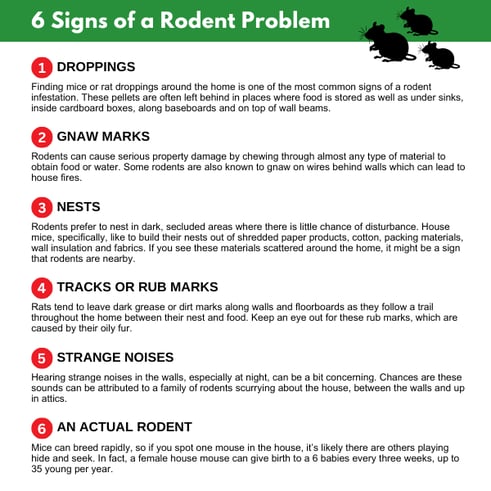
Watch for these six clues that suggest rodents might be nearby. Click the links to discover more about each:
Spotting a Rodent Infestation: What to Look For
Rodents are experts at remaining hidden, yet they leave behind small hints of activity. You might notice scratching sounds, chewed corners, or tiny droppings. Even subtle signs, like a small pile of debris or displaced items, can indicate their activity nearby. Identifying these signs early helps stop a minor problem from becoming a major infestation.
Noticing unusual activity? Here’s how to tell if rodents have moved in:
-
Actual Rodents
Rodents are masters of hiding, often staying out of sight until their activity becomes noticeable. Knowing which type of rodent has entered your home is essential for effective control. Common household species include:
- Norway Rats: Larger and robust, prefer basements, crawl spaces, and foundations.
- Deer Mice: Found mainly in wooded areas, with bi-colored fur and large eyes.
- House Mice: Small and adaptable, nesting in walls or cabinets.
- Roof Rats: Agile climbers that prefer attics and trees.
Seeing even one rodent indoors often indicates that more are lurking nearby. Professional exterminators can handle the issue thoroughly and effectively.
-
Droppings
Rodent droppings are often the first clue of an invasion. Here’s how to tell:
- Mouse Droppings: 1/8–1/4 inch long with pointed ends, usually near food or nesting areas.
- Rat Droppings: 1/2–3/4 inch long, blunt ends, bean-shaped, dark and moist when fresh.
Look behind appliances, beneath sinks, and inside cabinets for droppings or chewed items.
-
Strange Noises
Rodents are nocturnal, so scratching, scurrying, or gnawing sounds at night are clear signs. Common noises:
- Scurrying: Fast shuffles behind walls or floors.
- Squeaking: Communication or distress sounds.
- Scratching: Light, rapid sounds inside walls or ceilings.
- Gnawing: Distinct chewing sounds on wood, wiring, or insulation.
-
Gnaw Marks
Rodents gnaw to keep their teeth short. This can damage property and pose fire risks. Watch for:
- Rats: Large, rough chew marks through wood, plastic, or soft metals.
- Mice: Small, fine scratches on wood, cardboard, or insulation.
-
Nests and Nesting Material
Rodents build nests from shredded materials like paper, fabric, or insulation. Types include:
- Roof Rats: In attics or ceiling voids.
- Norway Rats: In burrows near foundations or crawl spaces.
- Mice: In walls, drawers, or behind appliances.
-
Tracks and Rub Marks
Rodents travel the same routes repeatedly, leaving behind visible traces. Look for:
- Tracks: Tiny footprints or tail marks in dusty areas.
- Rub Marks: Oily smudges along walls and baseboards from repeated contact.
Cooper Pest Solutions Helps You Spot a Rodent Problem Before It Grows
Signs of rodents in your home are often a strong indication of an active infestation. Acting early makes pest control easier and minimizes potential damage and costs.
Give Cooper Pest Solutions a call for a free, no-obligation estimate and expert help.