

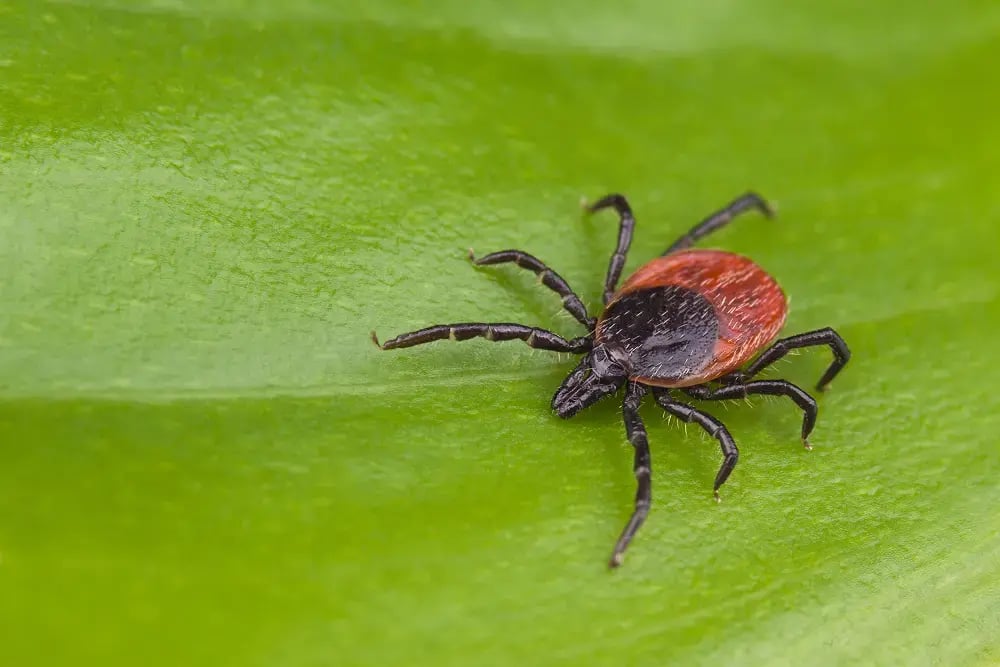
Ticks are a widespread concern throughout the United States, capable of thriving in many types of environments. These resilient pests can survive and multiply wherever conditions are favorable. At Cooper Pest Solutions, we remind residents that tick encounters can happen in both natural landscapes and managed yards.
Populations grow quickly when key factors align. Thick vegetation, abundant wildlife, and suitable living areas create ideal conditions for ticks. Areas like New Jersey and Pennsylvania often see elevated tick activity when these elements come together.
The best way to keep your yard free of ticks is to call a professional tick exterminator. They employ proven techniques to control tick populations and minimize disease risks.
Top 5 U.S. States for Tick Populations
- Pennsylvania: Frequently appears near the top for Lyme disease cases, fueled by dense populations of black-legged ticks.
- New York: Experiences consistently high tick activity, with ongoing concerns about Lyme disease and other tick-borne illnesses.
- Texas: Its large size, varied landscapes, and warm climate support thriving populations of multiple tick species.
- Florida: Year-round heat and humidity allow ticks like the American dog tick to remain active and reproduce continuously.
- California: Hosts substantial tick populations, particularly the Western deer tick, which is common in wooded and coastal regions.
Sadly, ticks are abundant in New Jersey and Pennsylvania, including those that transmit serious diseases, which raises the likelihood of tick bites and infections in the area.
In Which States Are Lyme Disease Ticks Most Common?
Across the country, Lyme disease remains a major tick-borne threat. Deer ticks, which carry the disease, are highly adaptable and can thrive in forests, backyards, and other areas frequented by people, increasing the risk of contact.
According to the Centers for Disease Control and Prevention, some states report far more Lyme disease cases than others. These higher rates are generally tied to areas with dense tick populations and ideal conditions for their survival. The following states have the highest reported activity.
- Pennsylvania
- New Jersey
- Wisconsin
- Washington, D.C.
- Connecticut
- Delaware
- Maine
- Maryland
- Massachusetts
- Minnesota
- New Hampshire
- Rhode Island
- Vermont
- Virginia
- West Virginia
- New York
Which States Have the Highest Heartland Virus Tick Activity?
Transmitted by Lone Star ticks, Heartland virus has emerged as a growing public health concern. Symptoms often include fever, tiredness, reduced white blood cell and platelet counts, and occasional liver problems. Public awareness has increased alongside rising case numbers.
Although Heartland virus infections are rare, they have been reported across multiple states. The documented locations include:
- Pennsylvania
- Arkansas
- Georgia
- Illinois
- Indiana
- Iowa
- Kansas
- Kentucky
- Missouri
- Virginia
- North Carolina
- Oklahoma
- New York
- Tennessee
In What States Are Alpha-gal Syndrome Cases Highest?
Bites from Lone Star ticks can lead to Alpha-gal syndrome, a serious allergy that produces strong reactions to red meat. As tick populations grow, the number of reported cases has steadily increased.
Some areas report particularly high numbers of Alpha-gal cases, highlighting the condition as a rising public health concern. Taking preventive measures and staying aware of the risks are essential. The states with the most reported cases include:
- Virginia
- Arkansas
- Delaware
- Illinois
- Indiana
- Kansas
- Kentucky
- Maryland
- Missouri
- Mississippi
- North Carolina
- Oklahoma
- Tennessee
Alpha-gal syndrome cases may be lower in New Jersey and Pennsylvania, but Lone Star ticks are present. Staying cautious outdoors and using preventive steps helps minimize risk.
Which U.S. States Have the Lowest Tick Populations?
Areas with smaller tick populations and lower rates of tick-borne illnesses often have dry climates, sparse forests, or geographic isolation that limit tick survival. These conditions naturally reduce the likelihood of encountering ticks.
Still, no state is completely free of ticks. Even in places with lower populations, ticks can appear occasionally, so caution is always advised. The top 10 U.S. states with the fewest ticks include:
- Idaho
- Alaska
- Utah
- Colorado
- Hawaii
- Montana
- Nevada
- North Dakota
- Colorado
- Wyoming
Even in states with lower tick numbers, disease-carrying ticks may still appear, especially in forests or hilly terrain. Always check yourself and your pets after outdoor activities and monitor for symptoms.
Why Do Tick-Borne Diseases Pose a Threat in New Jersey and Pennsylvania?
Ticks remain a constant threat in New Jersey and Pennsylvania because of various environmental and ecological factors. These conditions increase the risk of tick-borne illnesses for both residents and pets. Key reasons for their heightened danger include:
- Abundant Wildlife Hosts: Large deer populations promote tick reproduction, while white-footed mice contribute significantly to disease transmission.
- Ideal “Edge” Habitat: Yards bordering patchy woodlands create perfect conditions for ticks to locate and feed on hosts.
- Favorable Climate: Mild seasonal temperature changes boost tick survival and extend the period when they are active.
Tick activity in New Jersey and Pennsylvania creates a notable risk, so staying alert is crucial. After outdoor exposure, particularly in grassy or forested areas, check yourself, your children, and your pets carefully. Common tick species in New Jersey and Pennsylvania include:
- Deer Tick: One of the most widespread and potentially dangerous ticks. Known to transmit Lyme disease, Anaplasmosis, Babesiosis, and several other serious illnesses.
- American Dog Tick: A primary vector of Rocky Mountain Spotted Fever (RMSF) and Tularemia, posing significant risks to both humans and pets.
- Lone Star Tick: Originally from the South, but rapidly expanding its range. This tick can carry Alpha-gal Syndrome (a red meat allergy), Ehrlichiosis, Southern Tick-Associated Rash Illness (STARI), Tularemia, Heartland Virus, and more.
- Brown Dog Tick: Commonly found in homes, kennels, and around dogs. While primarily a threat to dogs, it can occasionally bite humans and may transmit Ehrlichiosis and other diseases.
Protect Your Property from Ticks with Cooper Pest Solutions
Ticks are a significant health risk nationwide, and in New Jersey and Pennsylvania, local populations make outdoor protection a priority. You can lower the risk of tick encounters by keeping yards clear of debris and having professionals establish a perimeter to keep ticks at bay.
For 67 years, Cooper Pest Solutions has helped families in New Jersey and Pennsylvania manage tick populations. We provide thorough, professional service to reduce exposure for your yard and loved ones.
Make tick protection a priority for your family and home by contacting Cooper Pest Solutions for a complimentary quote.