

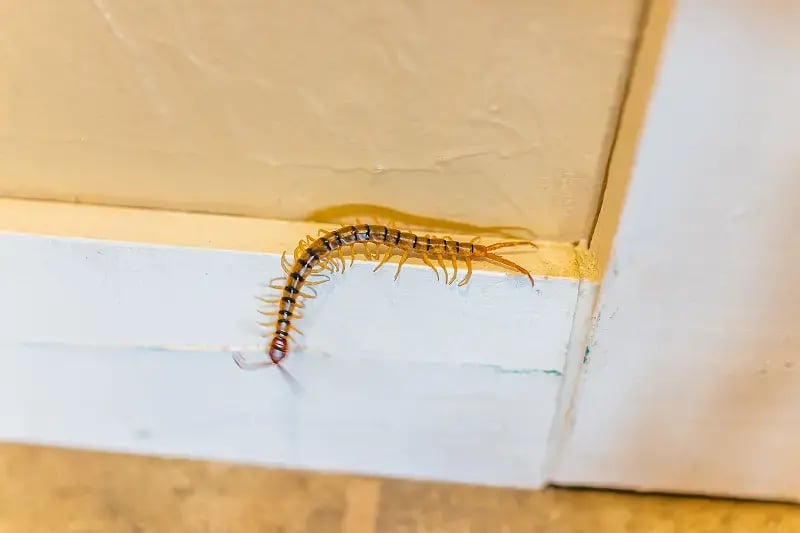
House centipedes (Scutigera coleoptrata) are known for their frantic movements, long legs, and uncanny ability to appear out of nowhere. While they don’t bite or sting humans in any serious way, their presence is enough to unsettle most people. If one has made an unexpected appearance in your home, you're probably wondering how it got there and why.
The simple explanation is house centipedes are just searching for food, moisture, and a secure place to hide. If your home meets those needs, it becomes an appealing environment for them to settle into.
How Do House Centipedes Slip Indoors?
These pests don’t need a large entrance to sneak inside. Guided by instinct and the presence of potential prey, house centipedes make their way in through tiny foundation cracks, holes around pipes, uncovered vents, loose siding, or small openings in windows and door frames. Once indoors, they look for areas that are dark, damp, and undisturbed, ideal spots to rest and hunt in peace.
Because they’re mostly active at night, you might not notice them right away. By the time they’re spotted, they’ve often already made themselves at home in places like crawl spaces, basements, or beneath bathroom fixtures.
They’re Following the Food Trail
Before ever entering your home, house centipedes usually dwell outdoors in damp, hidden spots, under mulch, stones, or piles of leaves. But when prey becomes scarce or starts creeping closer to your home, centipedes follow. While it’s true they feed on other bugs, which can help control certain pests, if you continue to see them inside, there’s likely a larger insect population inside your home.House centipedes are natural predators of many common pests, including:
- Ants
- Bed bugs
- Cockroaches
- Crickets
- Earwigs
- Moths
- Silverfish
- Spiders
- Termites
- And many more
Moisture Is a Major Attraction
These arthropods depend on humid environments to thrive. Outdoors, they seek out damp mulch, soggy logs, and compost piles. Indoors, they gravitate toward wet or poorly ventilated areas like bathrooms, laundry rooms, and basements.
Reducing excess moisture inside and around your home can go a long way toward discouraging them. Try the following tips as a first step:
- Repair leaking garden hoses and exterior spigots
- Keep gutters clean and ensure proper drainage away from your home
- Thin out thick shrubs near your foundation to allow sunlight and air circulation
- Use a dehumidifier in musty spaces
- Ventilate humid rooms like bathrooms and laundry areas
Clutter Makes It Easy for Them to Hide
House centipedes prefer quiet, dark hiding spots, and clutter provides just that. Whether it's piles of yard waste or crowded corners inside your garage, these spaces offer excellent daytime shelter for centipedes. If you’re serious about keeping them out, reducing clutter is an effective way to make your home less welcoming.
Here are some practical ways to eliminate their hiding places:
- Keep firewood stacked off the ground and away from structures
- Store unused gardening tools, planters, and patio items indoors or in sealed containers
- Bring in outdoor toys when not in use
- Rake and remove leaves or plant debris regularly
- Maintain a tidy lawn and remove overgrown weeds
- Seal cracks around doors, windows, and your foundation
- Fix broken window screens and replace worn-out weather stripping
A House Centipede Problem Typically Starts Outdoors
While it’s common to spot a house centipede scurrying across your bathroom floor or vanishing down a drain, these creatures don’t originate inside your home. Their life usually begins outside, where damp, sheltered spaces provide ideal conditions for survival. They often take cover beneath piles of wet leaves, within garden mulch, inside decaying wood, or under landscaping stones and bricks.
A particularly attractive area is the soil along your home’s exterior. It stays cool and moist, and the surrounding insect activity makes it a prime hunting ground. Once centipedes establish themselves near the foundation, it doesn’t take much for them to cross the threshold, especially during dry weather or when temperatures rise.
To help prevent them from sneaking indoors, take a look at these common outdoor hiding spots:
- Garden beds and planted borders: These attract insects like aphids and mites, which centipedes eat.
- Hardscaping elements: Under pavers, rocks, or patio edging, bugs and shelter are abundant.
- Unsealed trash containers: Rotting waste attracts flies and other insects, common favorites for centipedes.
If your yard holds onto moisture and is cluttered with debris, it becomes a beacon not just for bugs, but for the predators that chase them.
Should You Be Worried About House Centipedes?
Even though their many legs and frantic movement might make you nervous, house centipedes are generally harmless. They’re timid by nature and will usually retreat rather than defend themselves. Most of the time, they’re just passing through in pursuit of food.
That said, avoid handling them directly. House centipedes do carry venom, which they use to immobilize insects. If they feel threatened, they can deliver a defensive pinch with their front legs. It’s typically no worse than a mild bee sting, short-lived but still uncomfortable.
However, individuals with allergies to insect venom may experience more intense symptoms such as swelling, difficulty breathing, or dizziness. If that occurs, medical attention should be sought immediately.
Although they aren’t dangerous in most cases, it’s still best to keep children and pets from interacting with them.
Learn to Recognize House Centipedes
House centipedes have a distinct appearance that sets them apart from other household pests. If you see one, here are the features that can help you identify it:
- Legs: Slender and feather-like, their legs fan out from the body and resemble those of a spider.
- Total leg pairs: They have 15 pairs, fewer than some relatives, but enough to propel them quickly.
- Speed: These bugs are swift, often covering over a foot of ground in just a second.
- Coloration: Their bodies are pale yellow-gray, marked with three dark stripes running lengthwise.
- Antennae: Extra-long and sensitive, used for detecting movement in low-light spaces.
- Temperament: They’re reclusive and rarely confront people.
- Venom: Effective against small insects, but rarely causes more than mild irritation in humans.
Centipedes Point to Underlying Pest Issues
Just because you’ve seen a single centipede indoors doesn’t mean they’ve taken over. However, their presence is usually a sign that other insects are nearby. These hunters don’t stay in places that can’t support their diet. If a house centipede has moved in, there’s likely a thriving insect population keeping it fed.
Swatting or trapping one won’t address the underlying cause. To keep them from returning, you need to eliminate what’s attracting them in the first place.
That’s where professional pest control makes a difference. We’ll inspect your home and property, locate the source of the problem, and build a targeted plan to remove both centipedes and the insects they feed on.
Ready to take action? Contact Cooper Pest Solutions today to schedule your inspection and reclaim your space from unwanted pests.