

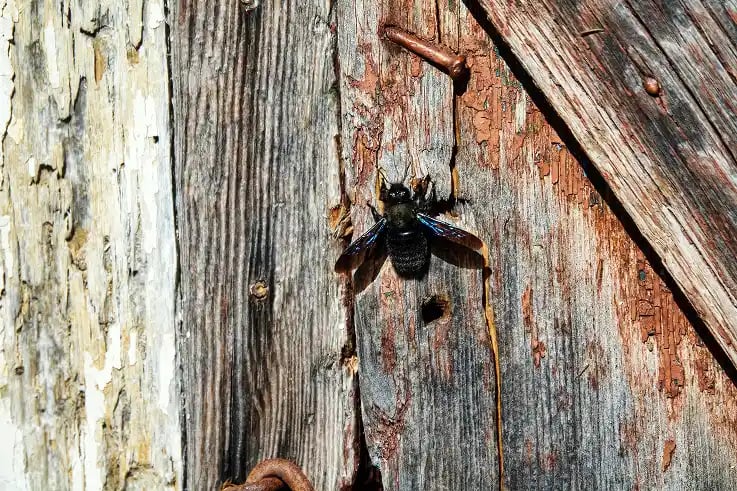
When large bees hover near your porch or wooden trim in New Jersey and Pennsylvania, carpenter bees are probably to blame. You’ll often see them in spring around decks, eaves, or railings. They’re solitary insects and not typically aggressive. Still, even with males unable to sting and females stinging only when threatened, their boring habits can damage wood and invite future infestations.
At Cooper Pest Solutions, we know how to handle carpenter bees. Our team identifies their activity, eliminates them, and provides long-term protection for your home.
The Real Impact of Carpenter Bee Damage
When multiple carpenter bees drill into your home’s wood and return year after year, the damage can become permanent. What begins as a few small holes can quickly escalate. Here’s what their activity can cause:
- Distinct Entry Holes: Perfectly round holes about the size of a nickel are one of the clearest indicators of carpenter bees. These openings often appear in rafters, beneath decks, or under other wooden areas where the bees start to tunnel.
- Visible Wood Damage: The tunnels carpenter bees create can look like short dashes, dots, or trenches on the surface of wood. Unlike termites, they don’t hide their activity and often leave these openings exposed.
- Compromised Support Beams: When carpenter bees bore into support beams, they slowly reduce the wood’s strength and stability. If left unaddressed, this damage can lead to bending, warping, or even structural failure. The good news is, there are usually visible signs well before it reaches that stage.
- Damaged Steps: Carpenter bees nesting inside wooden steps can cause them to weaken over time and eventually break. Much like damaged railings, this can increase the risk of falls or injuries.
- Weakened Railings: As carpenter bees tunnel into porch or balcony railings, they strip away the wood’s integrity. With time, the railings can loosen or even collapse, creating a safety hazard.
Think you might have a carpenter bee problem? Reach out to a professional stinging insect exterminator as soon as possible. Our experts use proven, up-to-date techniques to remove carpenter bees and protect your home. We’re ready to act fast when you call.
Identifying Carpenter Bees: What to Look For
Carpenter bees are often mistaken for bumblebees because of their similar size and shape. Both have robust bodies and fuzzy black heads, but the difference lies in the abdomen. Bumblebees are covered in hair from head to tail, while carpenter bees have shiny, hairless abdomens that catch the light.
These bees are drawn to unpainted or exposed wood, making decks, porches, and fences prime nesting areas. They bore straight into the surface before turning to follow the grain, carving out smooth, hidden tunnels. Because they tunnel directly into wood rather than building external nests, carpenter bees can weaken structures and cause expensive repairs.
Warning Signs of Carpenter Bees
Homeowners need to watch for signs of carpenter bee activity. These insects leave noticeable holes and markings in wood, which are the easiest ways to spot them. Catching the problem early can help avoid expensive repairs. Look out for these common warning signs:
- Internal Sounds: You may hear scratching or buzzing coming from inside the wood, signaling that carpenter bees are actively nesting within.
- Wood Shavings: Piles of sawdust or wood fragments often collect on the ground or nearby surfaces directly beneath the entry holes.
- Fan-Shaped Marks: Semi-circular or fan-like patterns around the entrance holes are a distinctive indication of carpenter bee activity.
- Visible Holes: Small, round holes roughly half an inch wide appear in untreated wood, marking the spots where bees have begun tunneling.
How Carpenter Bees Can Trigger Secondary Damage
The presence of carpenter bees can cause more than just cosmetic damage. Their tunnels, filled with growing larvae, produce soft scratching and buzzing that often goes unnoticed. Unfortunately, these subtle sounds do not escape the notice of woodpeckers.
Woodpeckers love to hunt for carpenter bee larvae, enlarging the small holes as they feed. What starts as minor surface damage can quickly evolve into significant structural problems requiring expensive repairs.
Preventing carpenter bee infestations early is crucial. Acting quickly stops both the direct damage from the bees and the secondary harm caused by birds drawn to the larvae.
Rely on Cooper Pest Solutions for Expert Bee Removal
The smartest way to protect your home from carpenter bees and the damage woodpeckers can cause is through expert pest control. In New Jersey and Pennsylvania, these bees can quickly create serious issues if left unchecked. Cooper Pest Solutions' trained technicians locate infestations, provide targeted treatment, and keep your property safe from further destruction.
Call Cooper Pest Solutions now to discover how our expert services can safely and effectively manage carpenter bees and other pests.