

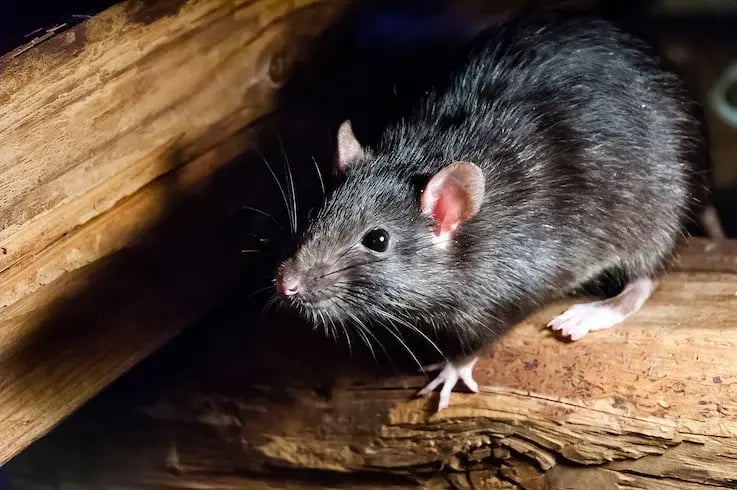
Rats, classified under the genus Rattus, are small mammals that have existed for millions of years and continue to thrive in a wide variety of environments. Once limited to Asia and Australia, they have spread across the globe, adapting with remarkable success. In New Jersey and Pennsylvania, their resourcefulness and survival skills make them a common sight, particularly in areas where humans provide shelter and food.
Unfortunately, these same qualities that make rats so adaptable also make them unwelcome guests in homes and buildings. Recognizing early signs such as gnaw marks, nests, and droppings is key to keeping infestations under control. That’s why working with Cooper Pest Solutions is essential, as we bring the expertise needed for effective and long-term rodent control.
Rat Behavior Explained
Rats are social creatures that rely on a combination of ultrasonic sounds, body movements, and pheromones to communicate. Grooming is a key part of their daily lives, as they clean themselves and each other to strengthen bonds and maintain health. Within their groups, known as a “mischief,” they establish social hierarchies that guide their interactions. Understanding these behaviors is important for rat control.
Most rats are nocturnal, so they are usually active after dark. Spotting them during daylight hours often indicates a heavy infestation. Their sharp intelligence, strong memory, and problem-solving skills have also made them important subjects in scientific studies.
What Kinds of Food Do Rats Eat?
Rats are opportunistic eaters, and while they can be selective, they adapt their diet depending on what is available. As omnivores, their meals range from natural plant-based foods in the wild to scraps found around human environments. Below are some common food sources for rats:
- Trash and Leftovers: Rats often scavenge through garbage and compost, consuming whatever scraps they can find.
- Pet Food: Unattended pet food is a frequent target, offering an easy and reliable meal.
- Grains, Seeds, and Nuts: In natural settings, rats feed heavily on grains, seeds, and nuts as staple foods.
- Fruits and Vegetables: Fresh or fallen produce provides both nutrition and hydration for rats.
- Insects and Small Animals: Though less common, some rats will hunt insects or small creatures when other food sources are scarce.
The Adaptability and Survival Skills of Rats
Rats are among the most adaptable animals in the world, able to survive in cities, rural landscapes, forests, and even cold climates. One fascinating fact about them is their ability to tread water for up to three days, giving them an edge in sewers, rivers, and lakes. Their keen sense of smell also plays a major role in finding food and navigating their surroundings.
As skilled foragers, rats are known to travel more than 300 feet from their nests in search of resources. They are also prolific burrowers, creating elaborate tunnels and hidden chambers. These burrows may be found underground, inside walls, or even within tree cavities, serving as secure areas for nesting and food storage.
What makes rats especially difficult to manage is their rapid reproduction. A single female rat can produce several litters per year, allowing populations to multiply quickly. Being primarily nocturnal helps them avoid detection from humans and predators, while their intelligence makes them capable of solving problems, remembering routes, and evading traps.
The Role of Rats in Science and History
Because of their close genetic and biological connection to humans, rats are among the most valuable animals in research. They have been instrumental in advancing knowledge in genetics, disease prevention, behavior, and the development of new treatments. Scientific studies involving rats have led to major discoveries that shaped both medicine and psychology.
Outside the laboratory, rats can have very different reputations. Wild rats are known carriers of disease, spreading illness through droppings, urine, and direct contact. By contrast, pet rats are admired for their gentle temperament, intelligence, and ability to bond with people. They are relatively easy to care for and can even learn tricks, making them rewarding companions.
How Intelligent Are Rats?
Rats are known for their high intelligence, capable of mastering complex tasks, solving puzzles, and finding their way through mazes. For more than a hundred years, scientists have studied rats in psychology experiments because their brain structure and decision-making processes are similar to those of humans. This makes them a valuable subject for research into learning, memory, and problem-solving.
One particularly interesting behavior is their ability to detect patterns and stick to them. Studies suggest rats are less likely to second-guess themselves compared to people, demonstrating focused efficiency. This capacity for pattern recognition and confidence in decision-making continues to make rats invaluable in behavioral science.
Rat Control Solutions from Cooper Pest Solutions
Having rats in your home can be dangerous, as they carry diseases, cause allergies and asthma, damage property, contaminate food, and reproduce quickly, leading to large infestations. In New Jersey and Pennsylvania, these problems are a frequent concern for homeowners. That’s why Cooper Pest Solutions has made rats part of its PestFree365 pest control program.
The first step to solving the problem is a detailed inspection. Our trained technicians will determine where rats are entering, where they nest, and the size of the infection. With regular treatments from Cooper Pest Solutions, your home can be protected from rats long-term
For proven rodent removal services, call Cooper Pest Solutions today.