

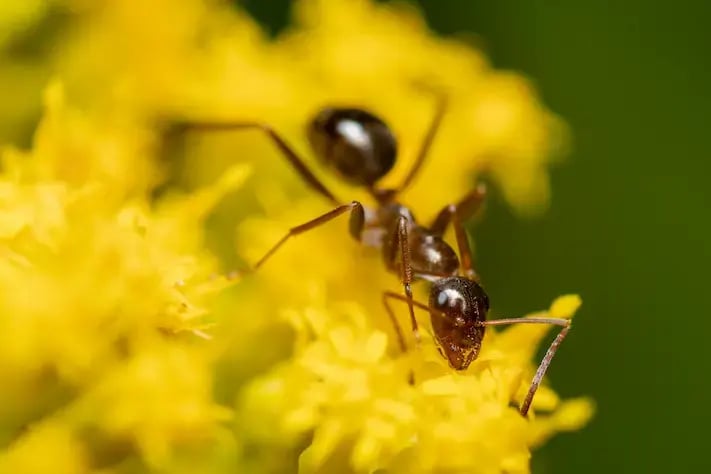
With the arrival of spring’s warmth and flourishing greenery, carpenter ants tend to become more active. Unlike common household ants, these pests burrow into wood, which can gradually compromise your home’s structure. If you’re seeing large ants indoors, especially winged ones, consider scheduling a professional inspection.
Not sure if the ants in your home are carpenter ants? Our guide can help you identify their features and understand their habits.
Why Carpenter Ants are Seen in Spring
As temperatures climb, carpenter ants become more adventurous, increasing their search for food and water. The excess moisture from melting snow and seasonal rains makes wood softer, providing ideal conditions for nesting.
One of their most noticeable spring behaviors is the nuptial flight. During this phase, winged reproductive ants, called alates, fly into the air in search of new areas to establish colonies. If you observe swarming flying ants near your home, it could be a sign that a nearby population is growing.
Recognizing Carpenter Ants in Spring
Here are some characteristics to help you identify them:
Large size (1/4 to 3/4 inch).
Dark coloration, often black.
Presence of winged alates during mating flights.
For a detailed identification guide, visit our Carpenter Ant Pest ID resource.
Signs That Carpenter Ants are Nesting Near Your Home
Carpenter ants remain active throughout the year, but certain warning signs become more noticeable in spring:
- More frequent sightings along your home’s foundation and exterior walls
- Small piles of frass and sawdust near damp or rotting wood, particularly after rain
- Increased ant activity around woodpiles, decayed logs, and tree stumps
Keeping Carpenter Ants Away This Spring
As temperatures rise and moisture levels increase, spring becomes the perfect season for carpenter ants to flourish. Taking preventive action now can help minimize the risk of an infestation. Try these strategies as a starting point:
- Fix leaks, enhance ventilation, and ensure gutters channel water away from your home to keep wood dry and less appealing to ants.
- Keep woodpiles elevated and positioned away from your home to prevent nesting.
- Check for gaps around doors, windows, and foundation cracks, then close them off to prevent ants from getting inside.
When to Bring in an Expert
Noticing carpenter ants or signs of their presence? Taking action immediately can help prevent structural damage. Colonies expand rapidly in spring, but professional treatment can stop the issue before it escalates. Check out our service page to explore treatment solutions and book an inspection.
Carpenter Ant Resources
At Cooper Pest Solutions, we provide the resources you need to stay ahead of carpenter ant infestations. Being proactive can help keep these wood-boring pests from settling in your home. Contact us for a free inspection, and follow this checklist to maintain a pest-free property.
Spring Maintenance Checklist:
- Seal any cracks or gaps in the foundation
- Check for signs of damp or decaying wood around your home
- Trim back shrubs and tree branches that touch your house
- Make sure water drains away from the foundation properly
- Schedule a professional inspection