
How to Get Rid of a Wasp Nest
It seems inevitable – stinging insects always show up exactly when you’re trying to spend time with friends or family in your backyard. So, what can you do to prevent this? Eliminate them at the source: the nest. But this is easier said than done, and if you’re like most people, the last thing you want to do is make a bunch of wasps angry.
That’s why we’ve put together this guide on how to identify and get rid of wasps’ nests.
Should You Try to Knock Down a Wasps’ Nest Yourself?
Once you discover a nest, it can be tempting to try to look up DIY solutions on YouTube and take it down on your own. However, it can be extremely dangerous without proper training, tools, and knowledge of pest biology and behavior.
So, how can you make knocking down a wasp nest as safe as possible?
How to Knock Down a Wasp or Hornets’ Nest Safely
Keep in mind: these tips will not completely eliminate your risk of getting stung. These tips are meant to minimize your chances of getting stung. Even if you follow all of these tips, it’s still possible to get stung.
- Choose your attire carefully: Wasps will be looking for exposed skin and gaps in your clothing. It’s best if you select thick fabrics, long sleeves, with gloves, and pants tucked into your socks.
- Wait until the colony is tired: Avoid doing this during the day – wasps are diurnal and this is when they’ll be most awake. Wait until after sundown, or do it very early in the morning.
- Choose the right product: We recommend a long-range foaming wasp spray that allows you to stand at least 15-20 feet back.
- Aim for the entrance: Find a hole that’s used as an entrance and spray into it. You need to spray the interior of the nest, not just the exterior.
- Plan your escape: Identify your exit route before you start spraying. You don’t want any tripping hazards in your way if wasps are chasing you.
- Give it 24 hours to work: You want as many wasps as possible to come in contact with the residue, so wait a day after spraying before you actually knock it down.
- Knock it down with a pole or broom: Wait until you notice zero wasp activity.
- Bag it up and throw it away: It’s important to seal the bag tightly as even dead nests can still have pupae that hatch later.

How to Identify Different Types of Wasp Nests
So you’re seeing wasps flying around your property. At this point, you’re probably wondering what you’re up against.
Getting it right the first time is crucial in successfully taking the nest down. Without the proper knowledge of stinging insect identification and a plan of action, things can go downhill quickly.
Yellow Jacket Nests
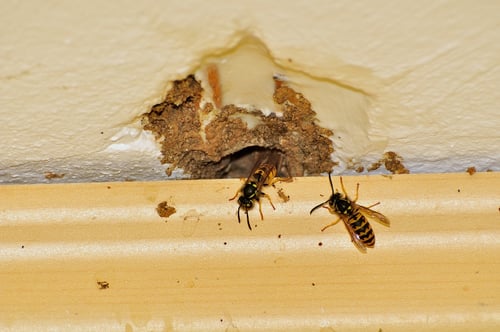
These opportunistic foragers are a common backyard nuisance, drawn to everything from flower nectar and tree sap to the sugary contents of a soda can or a ripe watermelon. Because they are scavengers, open trash bins act as a magnet for the colony.
Unlike other species, yellow jackets are masters of concealment, preferring to build their homes in secluded areas rather than in plain sight.
- Primarily found underground (such as abandoned rodent burrows) or structural voids (behind attic siding or inside hollow porch steps).
- If visible, the nest has a papery envelope covering it, but usually, you will only see a hole in the ground with high-speed traffic entering and exiting.
- They are extremely protective of their front entrance. If you accidentally step near a ground hole, they will swarm upward in large numbers.
Hornet Nests
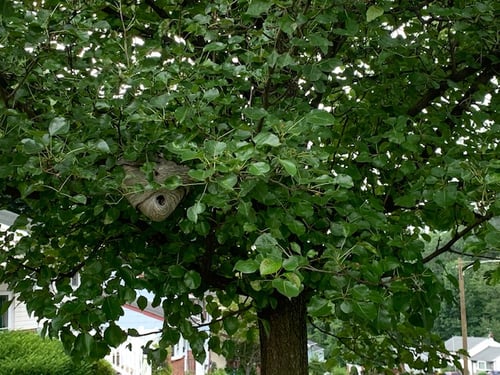
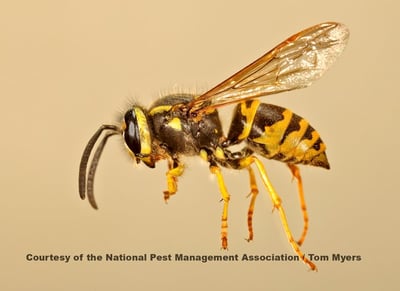
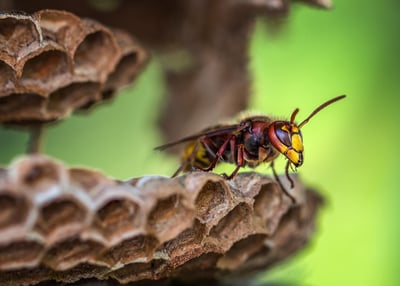
Widely feared for their size and defensive nature, hornets are aggressive architects that should never be approached closely. They are highly resourceful, scavenging raw materials like deck wood and leaf litter from the immediate area to manufacture a durable wood pulp for their structures.
What begins as a modest, golf-ball-sized nursery can rapidly balloon into a massive, basketball-sized fortress if the colony is not managed early.
- Usually found high up in trees or attached to the peaks of houses.
- These are large, grey, teardrop-shaped or football-shaped structures. They have a completely enclosed outer shell with a single, small circular opening at the bottom.
- The exterior looks like layered, swirled strips of grey bark or construction paper.
Mud Dauber Nests
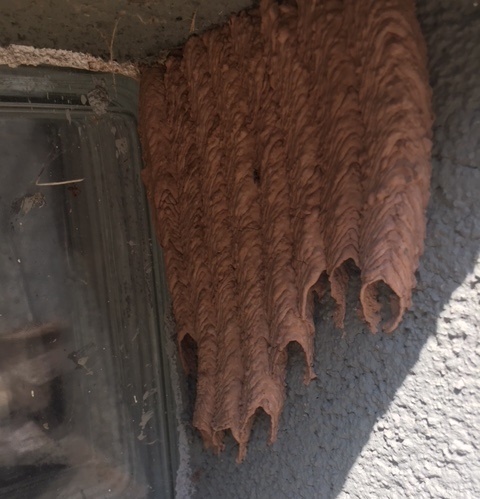
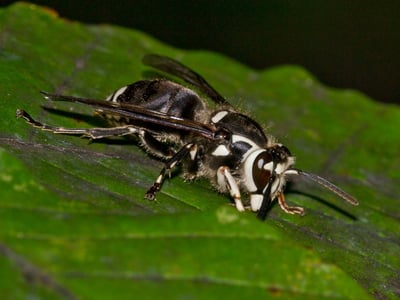
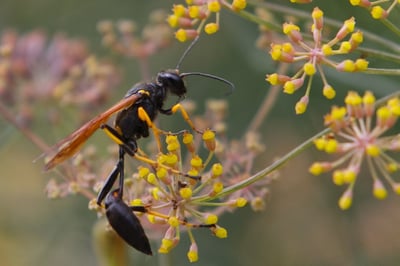
Often referred to as mud wasps, these are the "gentle giants" of the wasp world and are significantly less aggressive than their social cousins. Unlike the massive colonies formed by hornets or yellow jackets, mud daubers are solitary builders, with a single adult typically maintaining the nest.
Their presence is easily confirmed by their distinct, earth-toned masonry work found in sheltered areas.
- Built against flat surfaces like brick walls, garage ceilings, or wood siding.
- These look like hardened tubes of dried mud or clay. They may look like finger shapes or small, messy blobs of dirt plastered to a wall.
- If you see small holes in the mud tubes, the wasps have already hatched and left.
Paper Wasp Nests
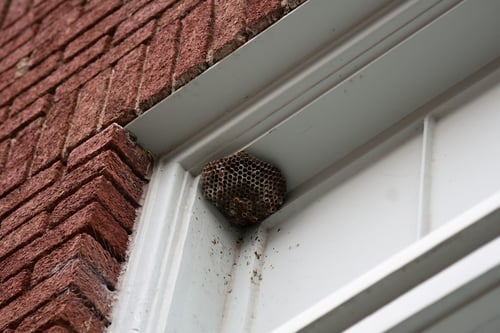
Often mistaken for yellow jackets due to their striped patterns and burnt-orange hues, paper wasps are among the first pests to emerge when the spring thaw begins in April or May. They remain tirelessly active throughout the summer months, expanding their territory as temperatures rise.
These wasps are highly territorial and are known to strike quickly if they feel their nesting site — which can be found on almost any man-made structure — is being encroached upon.
- Nests are tucked into protected corners: door frames, window shutters, railings, and underside of decks.
- Often called "Umbrella Nests" because they resemble an upside-down mushroom or umbrella.
- Unlike hornets or yellow jackets, paper wasp nests do not have an outer shell. You can see the individual hexagonal honeycomb cells where the larvae live.
Comparing Stinging Insect Nests - At a Glance
|
Yellow Jacket |
Hornet |
Paper Wasp |
Mud Dauber |
|
|
Nest Shape |
Hidden / Hole |
Football / Teardrop |
Open Honeycomb |
Mud Tubes |
|
Location |
Underground / Walls |
High Trees / Peaks |
Eaves / Railings |
Flat Walls / Sheds |
|
Aggression |
Very High |
High |
Moderate |
Low |
|
Visibility |
Low (Entrance only) |
High (Grey mass) |
High (Open cells) |
High (Mud blobs) |
Will Wasps Sting When You Try to Knock Down Their Nests?
Yes, they will certainly try. To a wasp, attacking the nest is Code Red – as big of a threat as they face – and they will do anything in their power to get you to stop.
Certain types of wasps are more aggressive than others. For example, yellow jackets will almost always defend their nest if they feel like they’re being threatened – intentionally or not.
On the other hand, mud wasps are much less aggressive. They can sting, but they largely ignore humans. The biggest risk for getting stung by any wasp, yellow jacket, or hornet is coming into contact with them, forcing them to defend their nest.
- If one lands on your skin, resist the urge to swat and instead gently blow on it.
- If stung, remove the stinger, clean the area with soap and cold water, and apply ice. Benadryl and hydrocortisone ointment may also help calm the reaction.
- Should you experience symptoms of an allergic reaction, such as tongue and throat swelling, wheezing, dizziness, shortness of breath or drop in blood pressure, call 911.
- If allergic to stinging insects, learn how to use an epinephrine kit and carry it with you at all times.
- If you suspect an infestation or notice a hive or nest on your property, contact a licensed pest professional to safely remove the threat.
What Are the Worst Ways to Get Rid of a Wasps’ Nest?
If you are tempted to take down a wasp nest on your own, you’ve probably heard of the following strategies. Avoid them – even at their best, the results can vary. And in many cases, you could be making the situation worse.
- Fire: Some people say, “Kill it with fire!” We say, “Hold on, there’s got to be a better way.” And there are lots of better ways. The problem is that, while fire may eliminate stinging insects and their nests, those nests are usually built into trees and bushes or your home. You risk lighting vegetation on fire and even burning down your house. Not the safest option.
- Dish soap: Wow, dish soap is strong enough to get rid of wasps? No way! Bloggers and YouTubers like to recommend this method because it’s easy, but even if you are brave enough to rely on soap and get within a few feet of angry stinging insects, the results can vary. Even if they do leave, they may just return in a few days when the nest dries out.
- Using a bat: Even at nighttime, this is just not safe. Defensive wasps and hornets are willing to die for the colony and will sting when provoked. If someone treated your home like a piñata, you’d be angry too.
When Should You Call a Professional for Wasps’ Nest Removal?
You should call a professional for nest removal services when safety and effectiveness are your top priorities. Here are just a few reasons why we’re the best choice for this type of job:
- Better equipped for the job: Professional pest control services differ from any DIY treatments because they have access to different tools. For example, wearing bee gear allows technicians to get very close to the nest without the risk of getting stung.
- More effective treatments: Professionals also have access to industry-grade pesticides that will not only kill wasps and hornets but also prevent them from coming back.
- Advanced knowledge of wasp biology and behavior: Knowing the biology and behavior of stinging insects is a big benefit that professionals have over DIYers. By understanding how they behave and why it’s more than just physically taking down the nest.
- Custom treatment plans: Each case is different, and nests are treated differently by pest, level of infestation, and location.
How Can You Prevent Wasp Nests from Coming Back?
Stinging insects are attracted to things we love to eat outdoors, such as watermelon, cantaloupe, and soda, that are uncovered. However, even if food and drinks are covered, outdoor trashcans lids need to be fully secured to avoid stinging insects.
The bottom line is that without professional pest control, it can be challenging to prevent wasps from returning to nest on your property.
Call Cooper for Wasp Nest Removal Services
Cooper Pest Solutions offers highly effective and specialized stinging insect nest removal services, whether you are looking to prevent them from nesting on your home or need help with an active nest.
One-Time Wasp Nest Removal Service
We offer One-Time Wasp Nest Removal Service to address active yellowjacket, hornet, and wasp nests on your property. When a technician arrives at your home, they will be wearing protective gear and have materials to penetrate the nest, reduce the population, and safely dispose of the nest.
This service comes with a 90-day guarantee, which includes unlimited technician visits within this period.
Wasp Prevention Service
At Cooper Pest Solutions, we have a unique service that prevents Wasps from nesting in your home. With our knowledge of wasp biology, we've created cutting-edge treatments to successfully prevent wasps from nesting on your home, decks, swing sets, storage sheds, etc. One treatment will prevent nest development for up to six months. Our residential wasp prevention service is available as a one-time service and is also included with our Home Intensive or Home Traditional services.
Our preventative Wasp Service is 100% guaranteed.
Home Intensive Plan
The Home Intensive Service Plan is designed to provide preventive pest and rodent control for your home, year-round. This plan also includes coverage against bumble bees, hornets, yellow jackets, mud wasps, and paper wasps all year round. This is our most popular service for homeowners, with protection for over 20 common household pests.
The service plan includes four preventive services per year. Each service is unique and will be accompanied by a detailed 30-point inspection report with detailed findings, as well as providing you with important recommendations for your home. Each year, you will receive three exterior maintenance services (March – November) and one interior service (December – February). The winter service will focus on the interior of the structure and is geared towards rodents and other pests that may live within the structure.
Home Traditional Plan
The Traditional Service Plan is a substantial value for the homeowner who does not want to be bothered by crawling insects, mice, and wasps. This plan also includes coverage against mud wasps, paper wasps, and yellow jackets up to 6ft on a ladder. The Traditional Service Plan provides preventive pest and rodent control for your home, year-round.
As part of your plan, you will receive four services per year. Each year, you will receive three exterior maintenance services (March – November) and one interior service (December – February). Coverage includes over 20 common household pests. The Home Traditional Plan offers coverage for fewer pests than the Home Intensive Plan, but both control stinging insects at varying levels.